

Sausage Cranberry Cornbread Stuffing

Bake sausage cranberry cornbread stuffing with celery, sage, and crisp edges. Learn how to add broth gradually and keep the center moist, not soggy.
Printable Recipe Card
Sausage Cranberry Cornbread Stuffing
Bake sausage cranberry cornbread stuffing with celery, sage, and crisp edges. Learn how to add broth gradually and keep the center moist, not soggy.
30 minutes
50 minutes
90 minutes
10 servings
Side Dish
American
10 servings
360 calories
Equipment
Large skillet
Large mixing bowl
9-by-13-inch dish
Thermometer
Ingredients
- 8 cups cubed cornbread, dried, about 1 1/4 pounds
- 1 pound bulk pork breakfast sausage
- 1 large onion, diced
- 3 celery stalks, diced
- 2 tablespoons unsalted butter, plus more for the dish
- 3/4 cup dried cranberries
- 2 tablespoons chopped fresh sage
- 1/4 cup chopped parsley
- 2 large eggs, beaten
- 2 to 3 cups reduced-sodium chicken broth, added gradually
- 1/2 teaspoon black pepper
- Kosher salt to taste
Instructions
- Heat oven to 350 degrees F and butter a 9-by-13-inch baking dish. If cornbread is soft, dry the cubes on a sheet pan first; cool before mixing.
- Brown sausage in a skillet, breaking it into pieces, until it reaches 160 degrees F. Transfer to a large bowl and drain excess grease, leaving about 1 tablespoon.
- Add butter, onion, and celery to the skillet. Cook 8 to 10 minutes until soft, then stir in sage and pepper.
- Gently combine cornbread, sausage, vegetables, cranberries, and parsley. Add beaten eggs and 2 cups broth; fold without crushing. Add more broth a little at a time only until moist with no puddles.
- Spread loosely in the dish and cover with foil. Bake 30 minutes, uncover, and bake 15 to 20 minutes more until the center reaches 165 degrees F and edges are golden. Rest 10 minutes.
Notes
Nutrition is an estimate per serving, not a laboratory analysis. Brands, substitutions, and portion sizes affect the values. Image is an AI-generated illustration. This newly developed recipe has not been independently kitchen-tested. Use dried cherries instead of cranberries, or replace pork sausage with cooked turkey sausage. Drying time for fresh cornbread is additional.
Storage
Refrigerate within 2 hours and use within 3 to 4 days. Freeze portions up to 2 months for quality.
Reheating
Reheat covered with a splash of broth to 165 degrees F, then uncover briefly for crisp edges.
Variations
Use dried cherries instead of cranberries, or replace pork sausage with cooked turkey sausage. Drying time for fresh cornbread is additional.
Nutrition
Sausage cranberry cornbread stuffing combines dried cornbread cubes with browned sausage, celery, onion, herbs, and small tart cranberry pieces. It bakes in a separate dish, giving you a moist center and a crisp upper layer without relying on the inside of a turkey for cooking. That separate bake is easier to time and lets you check the center temperature directly.
The cornbread's texture controls the result. Fresh, soft pieces can dissolve into a dense mash when broth is added, while dried cubes hold some shape. This recipe starts with baked cornbread that has cooled completely and dried further before assembly. Choose a mildly sweet or unsweetened version depending on the balance you want with the cranberries and savory sausage.
Dry Cornbread Without Turning It Bitter
Cut cooled cornbread into roughly one-inch cubes and spread on a baking sheet. Let it dry overnight in a protected dry spot, or use a low oven until the surfaces feel dry. Turn gently because cornbread breaks more easily than yeast bread. A few crumbs are expected and help bind the stuffing, but you want enough larger pieces for texture.
Do not deeply toast every side until dark brown. Cornbread can become bitter if its sugars scorch, and very hard cubes may need more broth than the recipe assumes. Measure the prepared cubes loosely rather than packing a cup with crushed crumbs. If using store-bought cornbread, note its sweetness and salt before seasoning the rest of the dish.
Brown Sausage Before Mixing
Cook bulk breakfast sausage in a skillet, breaking it into small crumbles. Pork sausage should reach 160 degrees F, while a poultry version needs 165 degrees F. Drain excess grease, leaving only enough in the pan to cook the vegetables. A stuffing full of rendered fat can feel heavy even when the cornbread ratio is correct.
Sage sausage works naturally with the holiday flavors. A sweet maple sausage makes a sweeter dish, so choose deliberately rather than treating every package as identical. If the meat is strongly seasoned, reduce additional salt and taste the cooked vegetable mixture before assembling. The raw egg mixture later should not be sampled.
Soften Celery and Onion First
Diced celery and onion need time in the skillet before they meet the cornbread. Raw pieces can remain sharp and crunchy inside a casserole whose top already looks finished. Cook until the onion is translucent and the celery has softened, then add garlic and herbs briefly. Let the mixture cool a little before combining with the egg binder.
Fresh parsley and sage give a clean herbal flavor. Dried sage is stronger by volume, so use a smaller amount if substituting. Rosemary can easily dominate this dish, especially with sage sausage, and is best used sparingly. A little black pepper balances the cranberries without turning the stuffing into a spicy side.
Add Broth Gradually to Protect the Cubes
Whisk eggs into part of the cooled broth, then pour over the cornbread with the sausage, vegetables, and cranberries. Fold with a wide spoon rather than stirring vigorously. Pause briefly so the dry cubes can absorb liquid before adding the rest. The mixture should feel evenly damp, with no large pool at the bottom of the bowl.
Different cornbreads absorb different amounts of broth. A very dry batch may need a little extra, while a soft packaged loaf may need less. The goal is not a pourable batter. You should still recognize some cubes after mixing. If the bowl looks soupy, hold back liquid rather than hoping a long bake will fix a heavily saturated mixture.
Keep the Cranberries in Proportion
Dried cranberries add small sweet-tart bites. Chop large ones so they spread through the whole dish. Fresh cranberries are more sour and moist, so they are not a direct one-for-one replacement in this recipe. A large amount can make the stuffing taste like a fruit casserole rather than a savory side.
If the dried fruit is extremely hard, soften it briefly in warm water and drain thoroughly. Extra liquid should not enter the cornbread mixture unmeasured. Chopped toasted pecans are an optional addition for crunch, but the base recipe does not require nuts. Label any nut variation clearly when serving a shared holiday meal.
Bake Covered, Then Crisp the Top
Transfer to a greased baking dish and cover for the first stage so the middle heats without drying the top. Uncover near the end to brown the exposed cubes. The center should reach 165 degrees F. A golden crust alone is not enough information, especially if you assembled the dish ahead and put it into the oven cold.
Rest ten minutes before scooping so the stuffing settles. Serve with roast poultry, pork, or a vegetable-centered holiday plate. The maple bacon Brussels sprouts make a contrasting green side, while garlic mashed potatoes provide a softer companion. Adjust portions if several rich side dishes share the table.
Plan Ahead Without Leaving Eggs Warm
Dry the cornbread and cook the sausage-vegetable mixture a day ahead, refrigerating the cooked components promptly. Combine with eggs and broth closer to baking, or refrigerate the fully assembled dish covered and allow extra cooking time. Follow the temperature guidance for your bakeware rather than moving a fragile cold glass dish straight into a hot oven.
Refrigerate leftovers within two hours and use within three to four days. Reheat covered to 165 degrees F, adding a little broth if dry, then uncover briefly for texture. Nutrition is estimated for ten side portions. Cornbread recipes vary substantially in sugar and fat, so the exact values depend on the loaf you choose and any optional nuts or extra butter.
Variations
Use dried cherries instead of cranberries, or replace pork sausage with cooked turkey sausage. Drying time for fresh cornbread is additional.
Storage and Reheating
Refrigerate within 2 hours and use within 3 to 4 days. Freeze portions up to 2 months for quality.
Food Safety Source
For safe cooking temperatures and food handling basics, see the USDA safe minimum internal temperature chart.
Frequently Asked Questions
Can I use sweet cornbread?
Yes, but cranberries also add sweetness. A less sweet cornbread gives a more savory balance.
How much broth is needed?
Start with 2 cups and add gradually. The amount depends on how dry and crumbly the cornbread is.
Can I assemble it ahead?
Refrigerate the assembled covered dish up to 1 day and bake until the center reaches 165 degrees F, allowing extra time from cold.
Is this gluten-free?
Only if the cornbread, sausage, broth, and all other ingredients are certified or verified gluten-free.
More Recipes You'll Love

Easy Stuffed Butternut Squash with Sausage and Spinach
Roasted butternut squash halves stuffed with savory Italian sausage, spinach, cranberries, and pecans for a hearty, flav
View Recipe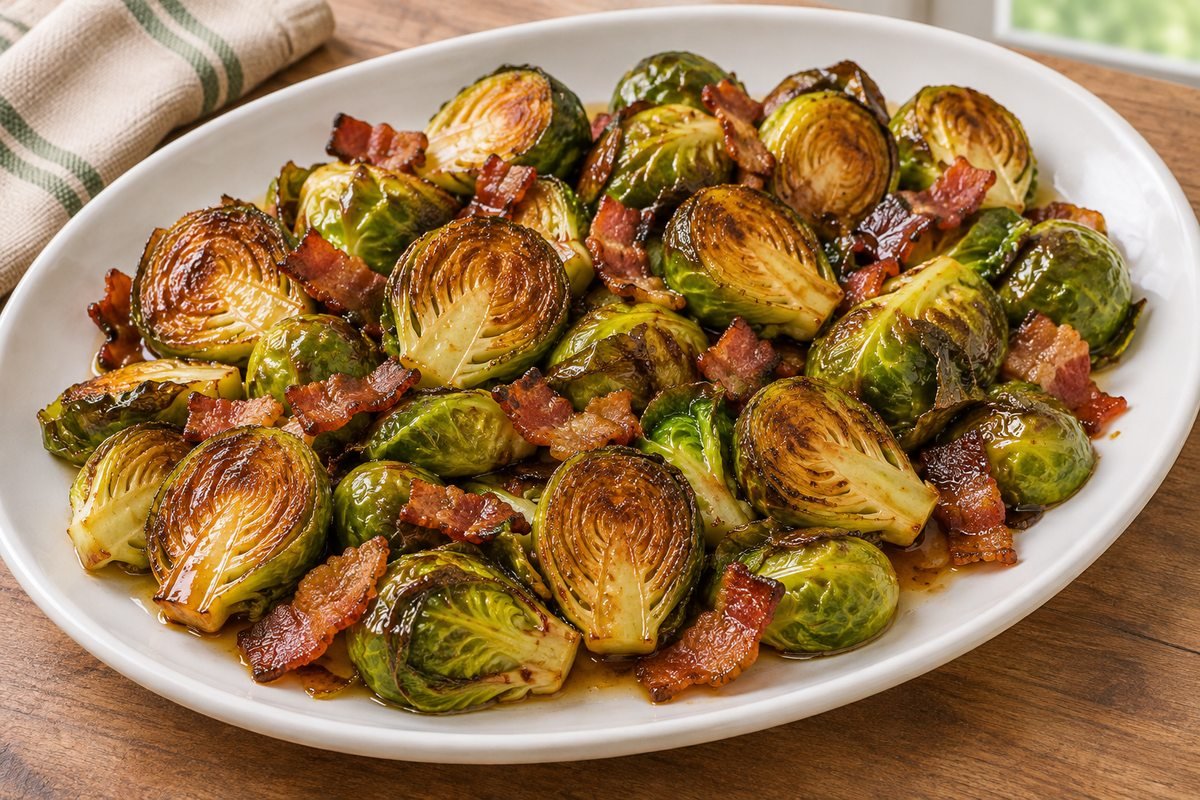
Maple Bacon Roasted Brussels Sprouts
Browned Brussels sprout halves finished with crisp bacon and a light maple-cider glaze. Add the maple at the end for bet
View Recipe
Roasted Sweet Potato Bites with Brie and Pomegranate
Roasted sweet potato rounds topped with creamy brie, juicy pomegranate, and crunchy pistachios.
View Recipe
Easy Homemade Scalloped Potatoes (Rich, Cheesy & Tender)
Tender sliced potatoes baked in a rich, creamy cheddar cheese sauce until golden and bubbly.
View Recipe