

Roasted Garlic Mashed Potatoes

Make roasted garlic mashed potatoes with warm milk and butter, including potato choices, gentle mashing, and make-ahead reheating tips.
Printable Recipe Card
Roasted Garlic Mashed Potatoes
Make roasted garlic mashed potatoes with warm milk and butter, including potato choices, gentle mashing, and make-ahead reheating tips.
15 minutes
45 minutes
60 minutes
6 servings
Side Dish
American
6 servings
300 calories
Equipment
Saucepan
Foil
Potato masher or ricer
Colander
Ingredients
- 3 pounds Yukon Gold or russet potatoes, peeled and cut in even chunks
- 1 whole head garlic
- 1 teaspoon olive oil
- 5 tablespoons unsalted butter
- 3/4 cup whole milk, warmed, plus more as needed
- 1 teaspoon kosher salt, divided, or to taste
- 1/4 teaspoon black or white pepper
- 1 tablespoon chopped chives
Instructions
- Heat oven to 400 degrees F. Trim the garlic top, drizzle with oil, wrap in foil, and roast 35 to 45 minutes until cloves are soft. Cool enough to squeeze and mash the cloves.
- Meanwhile cover potato chunks with cold water and add some salt. Bring to a simmer and cook 18 to 25 minutes until easily pierced.
- Drain well and return to the warm pot over very low heat for 1 to 2 minutes, stirring gently to release surface moisture.
- Rice or mash potatoes while hot. Fold in butter and roasted garlic, then warm milk gradually until softly mounded.
- Season to taste and add chives. Avoid a blender or prolonged beating.
Notes
Nutrition is an estimate per serving, not a laboratory analysis. Brands, substitutions, and portion sizes affect the values. Image is an AI-generated illustration. This newly developed recipe has not been independently kitchen-tested. Begin with half the roasted garlic for a milder flavor. Cream makes a richer mash than milk and changes nutrition.
Storage
Refrigerate within 2 hours and use within 3 to 4 days. Freeze cooled portions up to 2 months for quality.
Reheating
Warm covered with milk or broth, stirring, to 165 degrees F.
Variations
Begin with half the roasted garlic for a milder flavor. Cream makes a richer mash than milk and changes nutrition.
Nutrition
Roasted garlic mashed potatoes get their flavor from soft, mellow garlic cloves folded into warm potatoes with butter and milk. Roasting changes garlic's sharp bite into a sweeter, rounder flavor, so you can use a whole head without making the mash taste raw. The potatoes stay central, with enough garlic to notice and a small amount of chive for freshness.
This recipe is meant to be fluffy and spoonable rather than whipped into a smooth paste. A potato masher or ricer is more useful than a blender. The garlic can roast while you prepare the potatoes, or you can make it ahead and refrigerate it safely. Warm the milk before adding it so the mash stays hot and the butter incorporates evenly.
Choose Potatoes for the Texture You Want
Yukon Gold potatoes make a naturally creamy mash with a buttery color. Russets give a fluffier texture and absorb the milk readily. A mixture of the two is also reasonable. Waxy red potatoes hold their shape more firmly and create a denser result, so they are less convenient when you want a light holiday-style bowl.
Peel for a smooth mash or leave some skin for a rustic texture. Cut into similar two-inch pieces so they cook at the same pace. Tiny cubes take on more water, while very large chunks can leave a firm center. Place them in cold water before heating so the outside does not become mushy before the middle is tender.
Roast Garlic Until the Cloves Are Truly Soft
Cut the top from a head of garlic to expose the cloves, drizzle lightly with oil, and wrap in foil. Roast at 400 degrees F until the cloves are golden and easily squeezed, usually around forty minutes. Small heads may finish earlier. If the garlic is still firm, it will not blend smoothly and may retain a sharper flavor than expected.
Let the packet cool enough to handle before squeezing the garlic into a small bowl. Mash the cloves into a paste so they distribute throughout the potatoes. Check for papery skin before stirring it in. Roasted garlic tastes milder than raw garlic, but you can begin with half the head and add more after tasting if your family prefers a subtle flavor.
Drain Thoroughly Before Mashing
Simmer the potatoes until a thin knife slides into a large piece without resistance. Drain in a colander, then return them to the warm empty pot over very low heat for a minute or two. Shake or stir gently to let surface moisture evaporate. This drying step helps the potatoes absorb butter and milk instead of carrying excess cooking water into the bowl.
Do not leave the pot unattended while drying because potatoes can stick quickly once the water is gone. They should look steamy and slightly floury at the edges, not browned on the bottom. If a few pieces are still firm, return them to hot water rather than trying to beat lumps out of undercooked potatoes with a mixer.
Use Gentle Tools to Avoid Gluey Mash
Work the potatoes through a ricer or use a hand masher while they are hot. Add softened butter and the roasted garlic paste, then fold in warm milk gradually. Blenders and food processors release too much starch and can make the mixture sticky. Once that texture develops, adding more milk rarely restores a fluffy mash.
A few small potato pieces are acceptable in a hand-mashed version. If you want a smoother result, use a ricer rather than continuing to stir aggressively. The exact amount of milk depends on the potatoes' moisture. Start with the measured amount and add only enough extra to reach the consistency you want. The mash should mound softly without running across the plate.
Season at the End and Serve Warm
Salt the cooking water modestly, then taste the finished mash before the final seasoning. Unsalted butter provides more control, especially if you plan to serve salty gravy. White pepper keeps the appearance pale, while black pepper gives visible flecks and a more noticeable flavor. Chopped chives add a gentle onion note without overwhelming the roasted garlic.
For a classic dinner, pair with pot roast and gravy. They also work beside maple Dijon pork tenderloin, though you may choose mashed potatoes instead of that recipe's sweet potato side. Keep the meal balanced by adding a green vegetable or a salad.
Make Ahead Without Leaving Garlic at Room Temperature
Roasted garlic can be prepared a day ahead, cooled promptly, and refrigerated in a covered container. Do not keep garlic in oil on the counter. For the potatoes, freshly mashed gives the best texture, but a made-ahead batch can be gently reheated with a little extra milk. Covering the dish helps prevent a dry skin from forming on top.
If holding for a short period before dinner, keep the mash safely hot rather than leaving it lukewarm for hours. A heatproof bowl over gently simmering water can help with a brief hold, provided the bottom does not sit directly in the water. Stir carefully and check the texture before serving, adding warm milk if the surface has tightened.
Store and Reheat Another Portion
Refrigerate shallow portions within two hours and use within three to four days. Reheat to 165 degrees F while stirring so no cold center remains. Milk or broth can loosen a refrigerated portion, but add it gradually. An oven-safe covered dish works for a family portion, while the microwave is more practical for one or two servings.
Freeze cooled mash in portions for up to two months for quality. Thaw in the refrigerator and whisk gently during reheating if some liquid separates. Nutrition is estimated for six side servings with the listed butter and milk, without gravy. Cream, extra melted butter, or large servings change those values. The recipe's main advantage is the mellow garlic flavor, so you do not need to bury it beneath a heavy topping.
Variations
Begin with half the roasted garlic for a milder flavor. Cream makes a richer mash than milk and changes nutrition.
Storage and Reheating
Refrigerate within 2 hours and use within 3 to 4 days. Freeze cooled portions up to 2 months for quality.
Food Safety Source
For safe cooking temperatures and food handling basics, see the USDA safe minimum internal temperature chart.
Frequently Asked Questions
Which potatoes work best?
Yukon Gold gives a creamy texture; russets are fluffier. Similar chunk sizes help them cook evenly.
Why are mashed potatoes gluey?
Aggressive blending releases excess starch. Use a masher or ricer and fold gently.
Can I roast garlic ahead?
Yes. Cool promptly and refrigerate covered. Do not store garlic in oil at room temperature.
How do I loosen refrigerated mash?
Add warm milk or broth gradually while reheating and stir gently.
More Recipes You'll Love

Easy Homemade Scalloped Potatoes (Rich, Cheesy & Tender)
Tender sliced potatoes baked in a rich, creamy cheddar cheese sauce until golden and bubbly.
View Recipe
Butter Roasted Parmesan Potatoes with a Crispy Crust
Golden roasted Yukon Gold potatoes baked cut-side down in butter and Parmesan for an ultra crispy crust.
View Recipe
Crispy Sweet Potato Wedges with Lemon Herb Ricotta
Roasted sweet potato wedges seasoned with Mediterranean spices and topped with creamy whipped ricotta, lemon zest, and h
View Recipe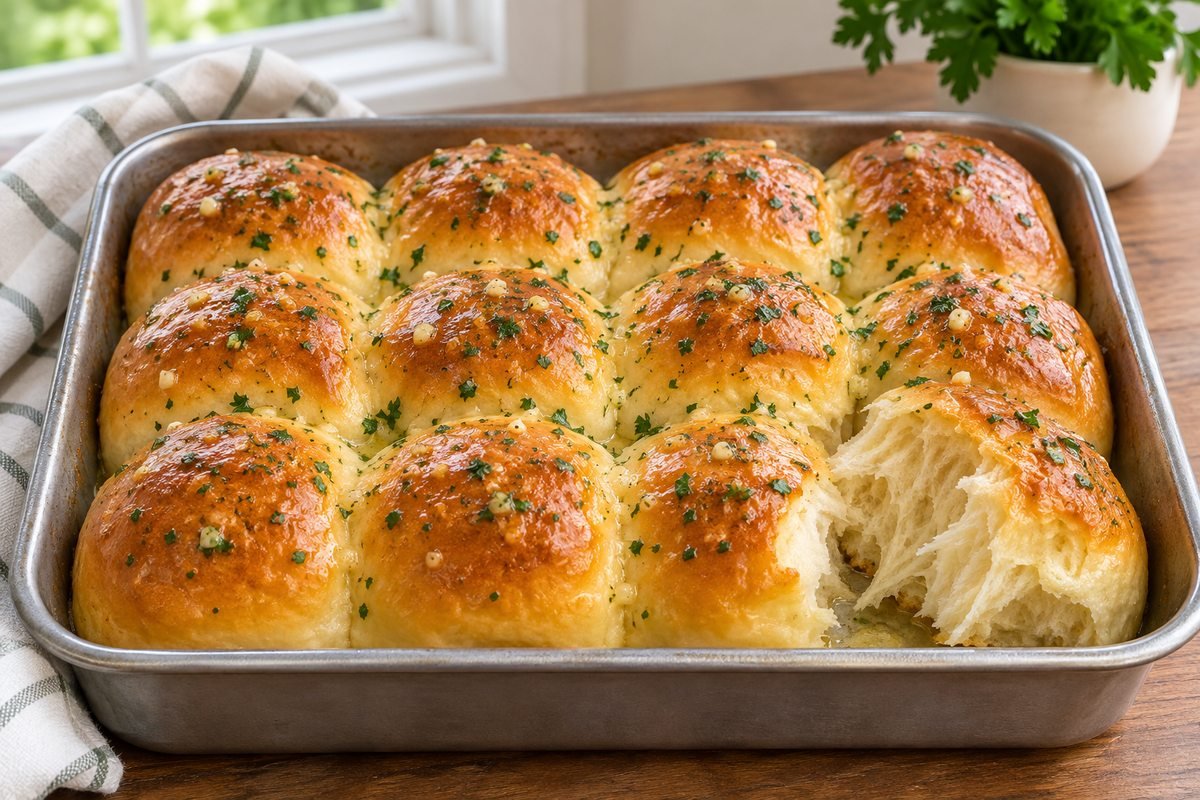
Garlic Butter Pull-Apart Dinner Rolls
Soft homemade yeast rolls baked close together and brushed with warm garlic-parsley butter. The article explains dough f
View Recipe