

Maple Bacon Roasted Brussels Sprouts

Browned Brussels sprout halves finished with crisp bacon and a light maple-cider glaze. Add the maple at the end for better roasted flavor without scorched sugar.
Printable Recipe Card
Maple Bacon Roasted Brussels Sprouts
Browned Brussels sprout halves finished with crisp bacon and a light maple-cider glaze. Add the maple at the end for better roasted flavor without scorched sugar.
15 minutes
30 minutes
45 minutes
6 servings
Side Dish
American
6 servings
170 calories
Equipment
Large rimmed sheet pan
Skillet
Mixing bowl
Slotted spoon
Ingredients
- 2 pounds Brussels sprouts, trimmed and halved
- 6 slices bacon, cut into small strips
- 1 tablespoon reserved bacon fat
- 1 tablespoon olive oil
- 1/4 teaspoon kosher salt, plus more to taste
- 1/2 teaspoon black pepper
- 2 tablespoons pure maple syrup
- 1 tablespoon apple cider vinegar
Instructions
- Heat oven to 425 degrees F. Rinse sprouts, dry very thoroughly, and halve them; quarter especially large ones.
- Cook bacon in a skillet over medium heat until crisp, about 8 to 10 minutes. Drain on paper towels and reserve 1 tablespoon fat.
- Toss sprouts with the reserved fat, olive oil, salt, and pepper. Arrange cut sides down on a large rimmed sheet pan without crowding.
- Roast 25 to 30 minutes until cut faces brown and centers are tender. Begin checking around 20 minutes and turn only as needed.
- Whisk maple syrup and cider vinegar together. Toss hot cooked sprouts with this glaze and the crisp bacon just before serving. Taste before adding more salt.
Notes
Bacon cooking overlaps with vegetable prep and roasting. Add glaze after roasting to prevent burnt syrup. Nutrition is estimated per one sixth of the recipe.
Storage
Refrigerate within 2 hours and use within 3 to 4 days. Store any extra crisp bacon separately when practical.
Reheating
Warm uncovered on a sheet pan to recover some browned edges; heat leftovers to 165 degrees F. Microwave reheating gives softer sprouts.
Variations
For a vegetarian version, omit bacon and replace its fat with olive oil. Add a small amount of chopped apple at serving for freshness.
Nutrition
Maple bacon Brussels sprouts work best when the vegetables roast first and receive their sweet glaze at the end. That order gives the cut sides time to brown before the maple syrup can scorch. Crisp bacon adds salt and texture, while apple cider vinegar keeps the finish from tasting like candy. The result is a side dish with green, tender centers and enough dark roasted edges to make Brussels sprouts interesting.
This recipe makes six side portions from two pounds of sprouts. It fits a holiday table, but the same pan is practical with pork chops, roast chicken, or a simple grain bowl. The main work is trimming and halving the vegetables. Once they are cut evenly and spread across a large pan, the oven does most of the cooking. Save the bacon and glaze until the final toss so they keep their intended texture.
Choose Sprouts That Roast at the Same Speed
Look for firm Brussels sprouts with tightly packed leaves. A few loose outer leaves are normal, but avoid vegetables with large yellow patches or soft spots. Similar sizes make roasting easier. If the bag contains a mix, halve the small and medium sprouts and quarter the largest ones. Leave enough stem attached to hold the leaves together rather than cutting away a deep cone from the center of each sprout.
Rinse the sprouts and dry them thoroughly. Water left between the leaves turns into steam and delays browning. A clean kitchen towel is useful after draining. Remove only the damaged outer leaves; sound loose leaves can roast alongside the halves and become crisp. Watch those small pieces toward the end because they brown faster than the centers. Trimming a large amount of stalk away can also cause the vegetable to fall apart during tossing.
Cook Bacon Separately for a Crisp Finish
Cooking the bacon in a skillet gives more control than scattering raw pieces over a crowded vegetable pan. Cut it into small strips and cook over medium heat until crisp, stirring as the fat renders. Transfer the pieces to a paper-towel-lined plate. Reserve one tablespoon of the rendered fat for tossing the sprouts and discard the rest safely after it cools. Do not pour warm bacon fat down the sink.
The bacon contributes both seasoning and fat, so start with a restrained amount of added salt. Thick-cut bacon works well if you give it enough time to render. Very large pieces can remain chewy instead of crisp. If your bacon produces little fat, add a little more olive oil to reach the amount specified for the vegetables. Keep the cooked pieces out of the maple glaze until serving so they do not lose all their crunch.
Put the Cut Sides Against Hot Metal
Toss the dried sprouts with the measured bacon fat, olive oil, black pepper, and a small pinch of salt. Spread them across a large rimmed sheet pan with the cut faces down. Those flat surfaces make direct contact with the hot metal and develop the best color. A crowded mound cooks more like steamed vegetables. Use two pans if necessary rather than trying to force every sprout into a small baking dish.
Roast at 425 degrees F and leave them undisturbed for the first part of cooking. Repeated stirring prevents the cut faces from developing a browned crust. After about twenty minutes, check a few and turn only if needed. The outer leaves can look dark, but they should not taste burnt. If your oven runs hot, begin checking early. Pan color and thickness can also affect how quickly the bottoms brown.
Add Maple and Vinegar at the End
Pure maple syrup and apple cider vinegar make a simple two-ingredient glaze. Whisk them together before the sprouts leave the oven. Maple syrup brings sweetness, while vinegar adds brightness without the heavier flavor of a thick balsamic reduction. Toss with the hot vegetables as soon as they are tender. The heat helps the glaze coat the surfaces without a long extra bake that could burn the sugar.
Use a light hand: this dish needs a glossy coating, not a pool of syrup under the vegetables. If you want stronger maple flavor, choose a darker maple syrup rather than doubling the volume. Pancake syrup has a different flavor and sweetness profile, so the result will not be identical. Taste after tossing and add a small pinch of salt only if the bacon has not already provided enough.
Know When the Centers Are Tender
A browned face does not always mean the whole sprout is cooked. Pierce a large piece through its stem end with a thin knife. It should slide in with mild resistance. Very firm centers need more time; mushy leaves mean the vegetables have gone too far. You want tenderness with enough structure to hold together on a serving spoon. Keeping the sprouts similar in size is the best way to reach that balance.
If the bottoms are dark but the centers stay firm, turn the sprouts and continue roasting a few minutes, lowering the heat slightly if necessary. Avoid adding a lot of water unless you deliberately want a softer, steam-finished vegetable. Too much moisture removes the crisp edges you worked to create. For particularly large sprouts, quartering them at the beginning is usually more effective than extending the roast until all the leaves turn black.
Fit Them Into a Larger Dinner
These sprouts complement a lean main dish because the bacon and maple provide richness. Try them with maple Dijon pork tenderloin for an autumn meal, or serve alongside a simple roast chicken. If the main course already has a sweet glaze, reduce the maple slightly and let the vinegar lead. For a holiday table with several rich casseroles, keep the serving portions modest and include a fresh salad too.
You can also turn leftovers into a lunch bowl with cooked farro, rice, or white beans. Add a mustard vinaigrette rather than more syrup. Chopped apples or a few dried cranberries make sense if you want a fruit element, but add them separately at serving. Cheese and nuts are optional variations rather than part of the base recipe. The pictured version and nutrition estimate use bacon, sprouts, oil, maple, and vinegar without those extras.
Adapt the Pan for Frozen Sprouts
Fresh sprouts give the clearest crisp edges in this recipe. Frozen ones release more water and usually finish softer. If using frozen sprouts, roast directly from frozen on a hot pan, allow extra time for moisture to evaporate, and halve them only when safe to handle if they are too hard to cut initially. Keep the maple glaze for the end as usual. Do not expect the same deeply browned flat faces from whole frozen vegetables without adjusting the method.
Prepare Early Without Sacrificing the Roast
Trim and halve the sprouts a day ahead, then refrigerate in a container lined with a dry towel. Cook the bacon ahead as well and store separately. Mix the glaze in a small covered jar. On the day of serving, dry any condensation from the vegetables, toss with fat, and roast. Adding the glaze only after cooking keeps this prep plan straightforward and protects the browned surfaces.
Refrigerate leftovers within two hours and use within three to four days. Reheat on an uncovered sheet pan so some surface moisture can evaporate; a microwave makes them softer but is still useful for a quick lunch. Warm leftovers thoroughly to 165 degrees F. Freezing is possible, though the sprouts lose their crisp texture after thawing. Estimated nutrition is per one sixth of the recipe, and sodium varies with the bacon and the salt you add at the end.
Variations
For a vegetarian version, omit bacon and replace its fat with olive oil. Add a small amount of chopped apple at serving for freshness.
Storage and Reheating
Refrigerate within 2 hours and use within 3 to 4 days. Store any extra crisp bacon separately when practical.
Food Safety Source
For safe cooking temperatures and food handling basics, see the USDA safe minimum internal temperature chart.
Frequently Asked Questions
Why are my sprouts soft instead of browned?
Wet vegetables or a crowded pan hold steam. Dry them thoroughly and spread the cut faces directly against the pan.
When should I add the maple syrup?
Toss with maple and vinegar after roasting so the sugar does not scorch during the long bake.
Can I prepare these ahead?
Trim sprouts, cook bacon, and mix glaze the day before. Store separately and roast close to serving.
Can I use frozen Brussels sprouts?
Yes, but expect a softer result and extra roasting time as moisture evaporates. Fresh halves give the most distinct browned faces.
More Recipes You'll Love
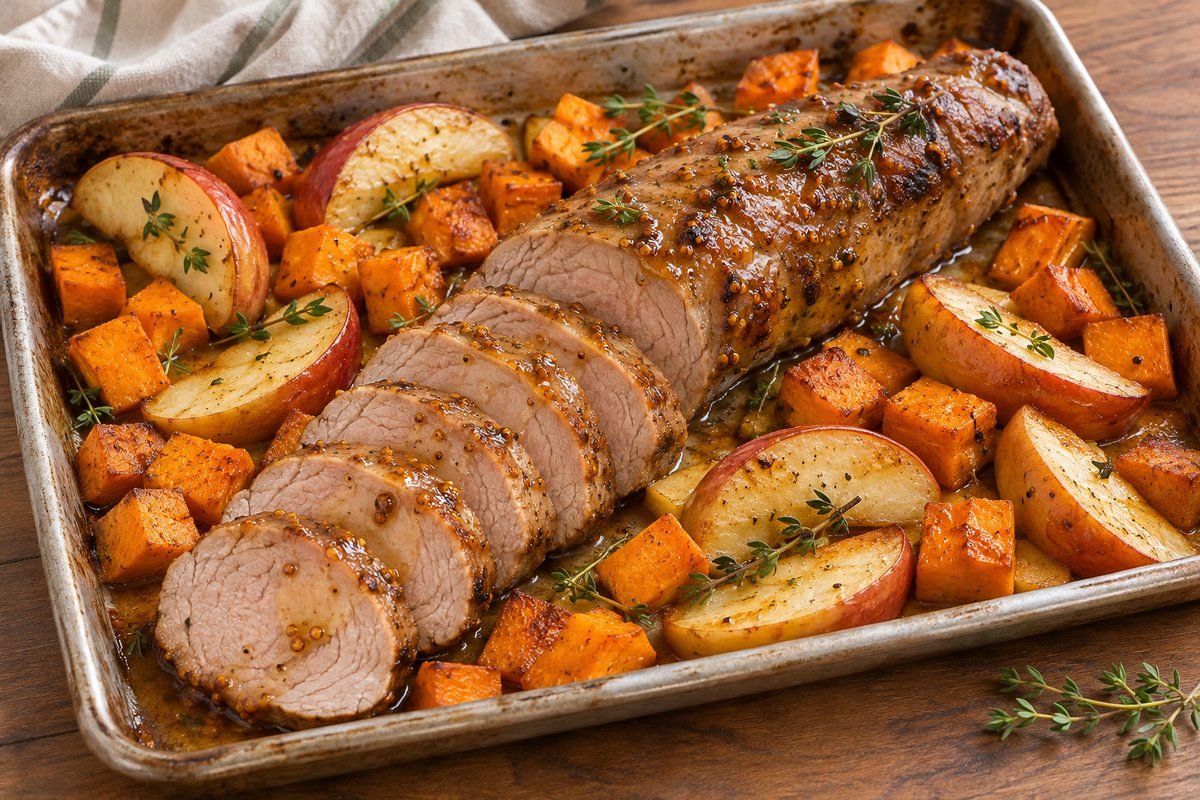
Maple Dijon Pork Tenderloin with Apples and Sweet Potatoes
A sheet-pan pork tenderloin dinner with a tangy maple Dijon glaze, roasted apples, red onion, and sweet potatoes that ge
View Recipe
Butter Roasted Parmesan Potatoes with a Crispy Crust
Golden roasted Yukon Gold potatoes baked cut-side down in butter and Parmesan for an ultra crispy crust.
View Recipe
Crispy Sweet Potato Wedges with Lemon Herb Ricotta
Roasted sweet potato wedges seasoned with Mediterranean spices and topped with creamy whipped ricotta, lemon zest, and h
View Recipe
Easy Homemade Scalloped Potatoes (Rich, Cheesy & Tender)
Tender sliced potatoes baked in a rich, creamy cheddar cheese sauce until golden and bubbly.
View Recipe