

Caramel Apple Bread Pudding

Bake caramel apple bread pudding with tender apples and a soft custard center, plus tips for soaking bread, checking doneness, and warming leftovers.
Printable Recipe Card
Caramel Apple Bread Pudding
Bake caramel apple bread pudding with tender apples and a soft custard center, plus tips for soaking bread, checking doneness, and warming leftovers.
25 minutes
55 minutes
115 minutes
10 servings
Dessert
American
10 servings
350 calories
Equipment
9-by-13-inch dish
Skillet
Mixing bowl
Thermometer
Ingredients
- 1 pound sturdy day-old bread, cut into 1-inch cubes
- 3 medium apples, peeled and diced
- 2 tablespoons unsalted butter
- 4 large eggs
- 2 cups whole milk
- 1/2 cup heavy cream
- 1/2 cup packed light brown sugar
- 2 teaspoons vanilla extract
- 1 1/2 teaspoons ground cinnamon
- 1/4 teaspoon fine salt
- 1/3 cup prepared caramel sauce
Instructions
- Heat oven to 350 degrees F and butter a 9-by-13-inch baking dish. Dry very fresh bread briefly in the oven and cool if needed.
- Melt butter in a skillet and cook apples 7 to 10 minutes until beginning to soften but still holding shape. Cool slightly.
- Whisk eggs, milk, cream, brown sugar, vanilla, cinnamon, and salt. Fold in bread and apples and let soak 20 minutes, turning gently once.
- Spread in the dish and bake 45 to 55 minutes until the center reaches 160 degrees F and is set with a slight wobble, not loose liquid. Tent if the top gets dark.
- Rest 15 minutes. Drizzle with caramel shortly before serving, rather than adding it to the raw custard.
Notes
Nutrition is an estimate per serving, not a laboratory analysis. Brands, substitutions, and portion sizes affect the values. Image is an AI-generated illustration. This newly developed recipe has not been independently kitchen-tested. Use firm pears in place of apples or add a small handful of raisins. Timing includes the soak and resting periods.
Storage
Refrigerate within 2 hours and use within 3 to 4 days. Store extra caramel separately.
Reheating
Reheat covered portions to 165 degrees F, then add caramel. A little milk helps soften dry edges.
Variations
Use firm pears in place of apples or add a small handful of raisins. Timing includes the soak and resting periods.
Nutrition
Caramel apple bread pudding combines bread cubes, softened apples, a vanilla egg custard, and a light caramel finish. The top turns golden while the center stays tender and spoonable. It is a useful way to turn a day-old loaf into dessert, but it still depends on measured liquid and enough baking time for the custard to set.
The apples are cooked briefly before assembly so they do not remain hard inside a soft pudding. That also lets some moisture evaporate before they meet the bread. Use a modest caramel drizzle after baking rather than pouring a large amount into the custard. The apples and brown sugar already contribute sweetness, and the pudding should retain a clear vanilla-and-cinnamon flavor.
Choose Bread That Can Absorb Custard
French bread, challah, or brioche work well when slightly stale. Cut into one-inch cubes and dry briefly in a low oven if the loaf is very fresh. Soft sandwich bread can turn pasty under the liquid, while an extremely dense loaf may leave dry centers. The recipe uses a one-pound loaf, making weight more reliable than a loosely filled mixing bowl.
Leaving crusts on gives a varied texture and more browned edges. If you prefer a completely soft pudding, trim the toughest crust before weighing the bread. Do not add extra bread simply because the bowl initially looks wet. It needs a short soak, during which the cubes absorb much of the custard.
Soften Apples Before Building the Pan
Firm apples such as Honeycrisp or Granny Smith provide pieces that hold their shape. Dice them small enough to fit on a spoon, then cook in a little butter with cinnamon until beginning to soften. They do not need to become applesauce. Let them cool slightly before combining with the egg mixture.
Cooking the apples separately gives you a chance to judge their sweetness. Very tart fruit may need a small extra spoonful of sugar, while sweet apples do not. Do not add a deep pool of syrup from the skillet without considering the measured custard. If the apples release a lot of liquid, cook it down briefly before assembly.
Whisk a Smooth Vanilla Custard
Eggs, milk, cream, brown sugar, vanilla, and a little salt form the base. Whisk until the sugar is mostly dissolved and no separate egg-white streaks remain. Pour over the bread gradually and fold gently, then add the cooled apples. Press the exposed top cubes down lightly so they make contact with the liquid.
Let the mixture soak for about twenty minutes. The bread should soften without being mashed into a uniform batter. If a few cubes stay dry at the surface, turn them into the custard rather than adding a large unmeasured pour of milk. The final texture should show bread pieces, not look like a smooth custard pie.
Keep Caramel as a Finishing Accent
A prepared caramel sauce is a convenient option, or use a homemade sauce you already make successfully. Warm it gently until pourable rather than boiling it into a thick candy texture. Drizzle over baked servings or lightly across the pan after resting. Keeping the sauce separate also lets people choose how sweet to make each bowl.
Salted caramel can be pleasant, but taste before adding more salt elsewhere. Very thick refrigerated sauce may need a small amount of cream to loosen according to its recipe or label. Do not microwave a sealed jar. Heat only what you need in a microwave-safe container and stir before judging its temperature.
Bake Until the Middle Is Set
Use a greased 9x13-inch baking dish and begin at 350 degrees F. Cover loosely for the first part if the top bread browns quickly, then uncover to finish. The egg-based center should reach 160 degrees F and no longer release liquid custard when the pan is nudged. A few moist apple pieces on a knife are not the same as raw custard.
Allow at least fifteen minutes of rest after baking. The pudding settles and becomes easier to portion as it cools slightly. A hot spoonful can look very loose immediately out of the oven even when the custard has cooked. Avoid extending the bake until the entire center looks dry, which defeats the tender texture that makes bread pudding appealing.
Serve Warm Without Overloading the Plate
A small scoop of ice cream or plain whipped cream is optional. Add it beside the pudding rather than over the whole stored pan. Coffee, tea, or a glass of cold milk pairs naturally with the cinnamon and caramel. The dessert is rich enough that a modest square or spooned portion works well after a substantial dinner.
For another apple dessert with a crisp topping, see the apple oat crumble. The Swedish apple cake gives a more sliceable alternative. Bread pudding is deliberately softer, so do not expect it to behave like a dry cake when lifted from the dish.
Plan Storage Around the Dairy Custard
Refrigerate portions within two hours and use within three to four days. A shallow container cools more effectively than leaving the full deep pan covered on the counter. Reheat to 165 degrees F with a small splash of milk if needed. Add caramel after reheating so it stays a distinct finishing sauce rather than soaking into every surface.
Freeze cooled portions for up to two months for quality, then thaw in the refrigerator. The bread may soften further after freezing, which is usually acceptable in a spoon dessert. Nutrition is estimated for ten servings with the measured caramel drizzle, without ice cream or whipped cream. Different bread types, especially rich brioche, can change the final fat and calorie totals.
Variations
Use firm pears in place of apples or add a small handful of raisins. Timing includes the soak and resting periods.
Storage and Reheating
Refrigerate within 2 hours and use within 3 to 4 days. Store extra caramel separately.
Food Safety Source
For safe cooking temperatures and food handling basics, see the USDA safe minimum internal temperature chart.
Frequently Asked Questions
Which bread should I use?
A sturdy day-old sandwich loaf, brioche, or challah works. Very soft fresh bread can collapse.
Must the apples be cooked first?
A brief skillet cook helps diced apples become tender before the custard overbakes.
Can I prepare it ahead?
Refrigerate the assembled dish covered up to 1 day. Bake from cold with extra time as needed and verify the center.
Why is it wet in the middle?
It may need more baking time or may have used too little bread. Check the center temperature and custard texture.
More Recipes You'll Love

Homemade Apple Cider Donuts with Gooey Caramel Centers
Soft apple cider donuts filled with gooey salted caramel and coated in warm cinnamon sugar.
View Recipe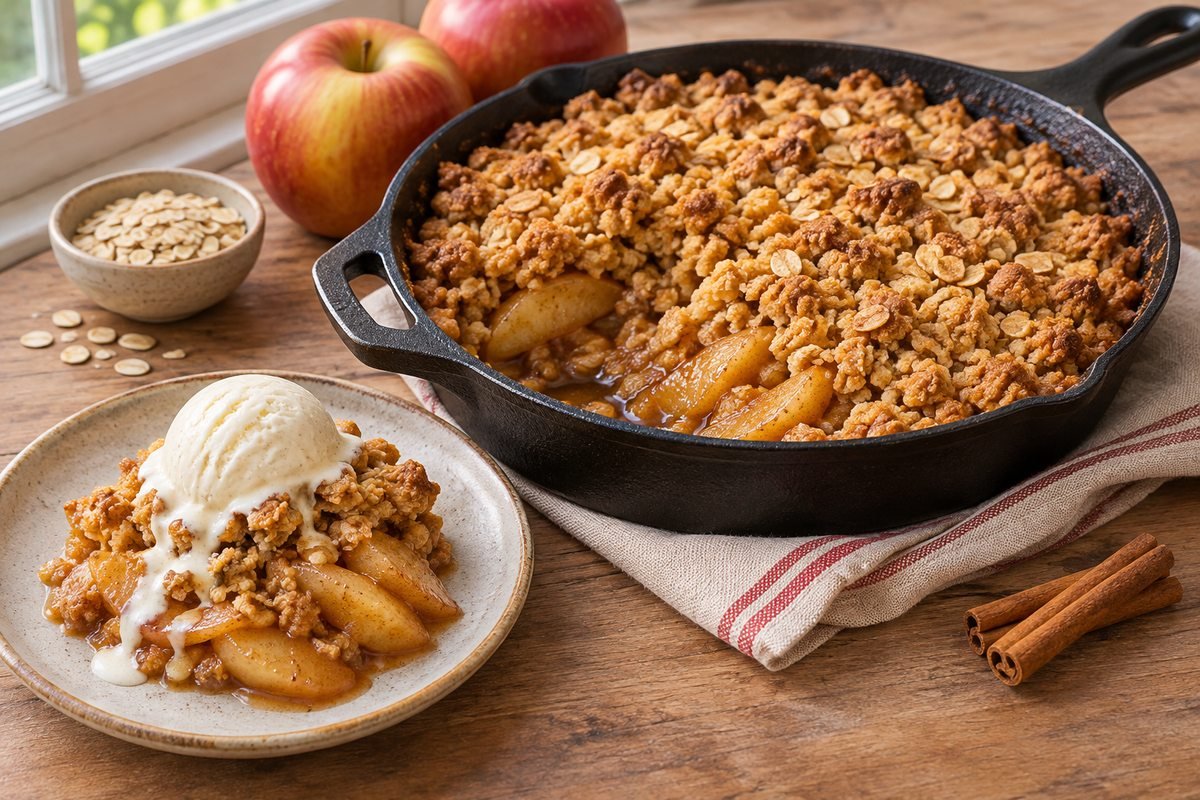
Skillet Apple Oat Crumble with Cinnamon
A pastry-free apple dessert with tender cinnamon fruit and a loose, buttery oat topping. Use a mix of tart and sweet app
View Recipe
The Best Swedish Apple Cake Recipe (Soft and Buttery)
A soft, buttery Swedish apple cake topped with cinnamon-sugar apples and baked until golden and tender.
View Recipe
Soft Apple Slice Bars with Cinnamon and Nutmeg – Chicago Bakery Style
Soft, bakery-style apple slices baked with cinnamon and nutmeg, filled with tender apple pieces and lightly dusted with
View Recipe